


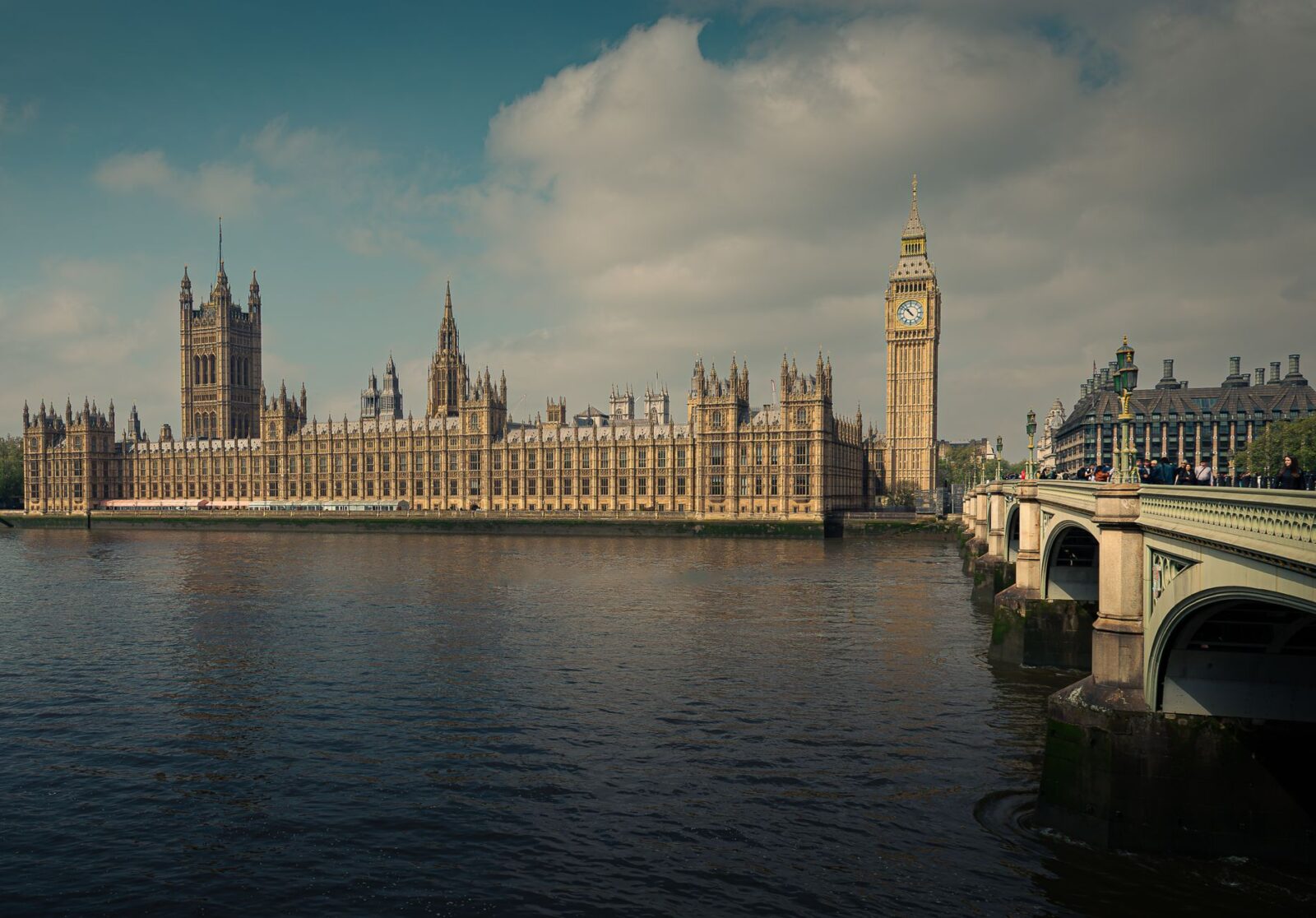
UK MPs may be considerably more pessimistic about public support for climate policy than voters themselves, according to new research led by the University of Cambridge.
The study, published on 19 August in Communications Sustainability, compared MPs’ estimates of public attitudes towards four carbon-reduction policies with nationally representative polling. Researchers found that parliamentarians underestimated public support by an average of around 11 percentage points and tended to see the electorate as more politically divided on climate measures than the polling suggested.
The findings are based on an online survey experiment involving 100 sitting MPs, conducted between December 2024 and January 2025. The research team included scholars from Cambridge’s El-Erian Institute of Behavioural Economics and Policy and the university’s Political Psychology Lab.
A gap between perceived and measured opinion
One of the clearest differences concerned support for improving the energy efficiency of homes. MPs collectively estimated opposition to making grants or loans available to households with an energy performance rating of C or below at about 18%. The public polling used as a benchmark put opposition at 6%.
A similar pattern appeared when MPs considered a tax system in which products would be taxed differently according to their environmental impact. Parliamentarians estimated public opposition at roughly 38%, compared with 20% in the polling data.
The peer-reviewed paper reports that MPs also underestimated support for the policies. Across the measures studied, the average shortfall was about 11 percentage points. Researchers found especially large gaps between how divided MPs believed different voter groups to be and the differences measured in public polling.
The work does not show that every climate proposal enjoys broad public support, nor does it establish that public opinion is fixed. Instead, it examines a narrower question: whether political decision-makers accurately perceive the level and distribution of support for specific proposals.
Why perceptions inside Parliament may matter
The researchers argue that inaccurate expectations about public resistance could affect which policies politicians consider politically feasible. In the study, lower perceived public support for a green product tax was associated with a lower willingness among MPs to advocate for the policy, even after accounting for their own views.
The authors describe this as evidence consistent with a possible “spiral of silence” in Parliament: if politicians believe voters or colleagues are more hostile to a proposal than they actually are, they may become less willing to speak in its favour. The effect was not detected for every policy tested, however, and the paper is careful not to treat the mechanism as universal.
The experiment also tested whether showing MPs public polling data could correct their estimates. According to the researchers, providing that information produced only limited and uncertain improvements when MPs were subsequently asked about another set of climate policies.
That finding suggests that simple access to polling may not be enough to close perception gaps. The authors point instead to the wider information environment surrounding politicians, including media coverage and highly vocal groups that may not reflect the full distribution of public opinion.
Important limits to the findings
The sample included 80 Labour MPs, 16 Conservative MPs and four Liberal Democrat MPs. The researchers note that this broadly reflects the dominance of Labour in the Commons at the time but overrepresents Labour MPs and underrepresents Liberal Democrats.
The public comparison data came from a nationally representative Ipsos UK survey of 4,201 adults conducted in April 2024. This means the research compares MPs surveyed later in 2024 and early 2025 with public attitudes measured several months earlier. The study therefore provides a structured comparison rather than a real-time measure of opinion in 2026.
For Cambridge, the research is notable because it connects behavioural science directly with a live public-policy question: how political institutions interpret evidence about the people they represent. It also illustrates the difference between measuring public attitudes and assuming what those attitudes are.
The full peer-reviewed study is available through Communications Sustainability. The University of Cambridge research briefing provides additional detail on the experiment and the policy questions tested.