


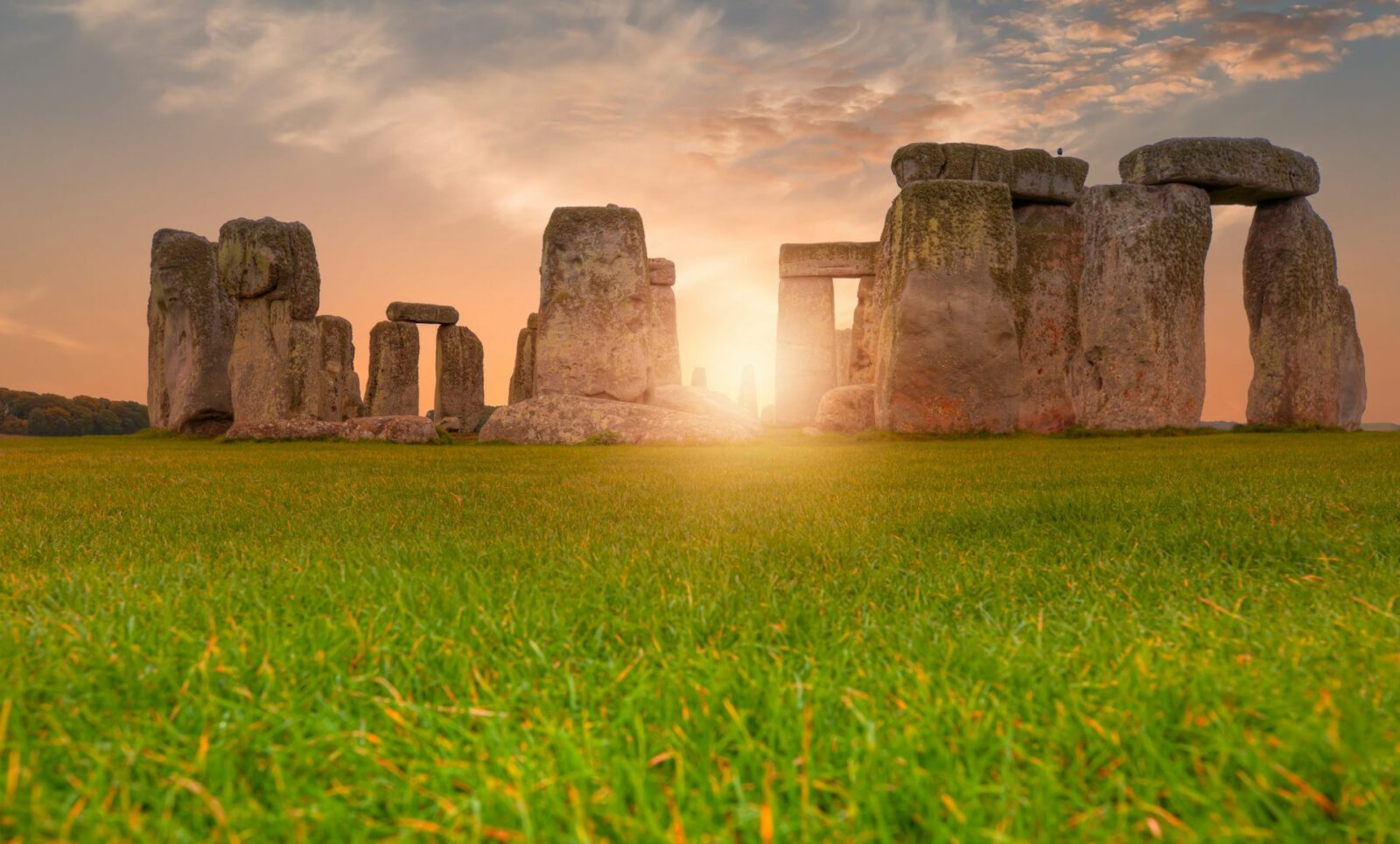
A fresh study has proposed a new hypothesis regarding the movement of the Altar Stone, one of the iconic monoliths found at the Stonehenge site. While long-standing theories have suggested that ancient humans transported the six-tonne sandstone block from Scotland using land or sea routes, recent geological analysis points toward the possibility of glacial transport.
The Altar Stone, which measures approximately five metres in length, is composed of Old Red Sandstone. Geochemical analysis has previously confirmed its origin from the Orcadian Basin in northeast Scotland, a distance of several hundred miles from its current position in Wiltshire. Researchers investigating these heavy, non-local stones are now considering whether natural forces, rather than purely human engineering, played a significant role in their initial migration southwards.
Glacial Movement and Geological Evidence
The new theory suggests that during the Late Pleistocene period, ice sheets may have carried the massive rock across vast distances. If the stone was incorporated into a glacier, it could have been deposited in the region long before Neolithic builders arrived to construct the monument. This challenges the assumption that human labour was solely responsible for moving every component of the prehistoric structure across such challenging terrain.
This perspective requires a re-evaluation of how early civilisations interacted with the landscape. Understanding the logistical constraints of the period often mirrors modern debates surrounding UK transport change, where infrastructure and resource management dictate the viability of large-scale projects. If the stone was already local to the area, it would have significantly reduced the burden on the monument’s architects.
While the glacial hypothesis provides a compelling alternative to manual transport, it remains a subject of ongoing debate within the archaeological community. Scientists are continuing to refine their methods for tracing the history of individual rocks, looking for definitive evidence of glacial striations or associated geological markers that would corroborate this theory.
As research into these ancient materials evolves, the intersection of geology and archaeology continues to demonstrate how modern technology economy tools—such as advanced isotopic analysis and remote sensing—can reveal hidden details about our past. These findings highlight that Stonehenge remains not only a monument of cultural significance but also a site of continuous scientific discovery.
Integrating these findings with other datasets, such as everyday access to historical context, allows for a more holistic understanding of how these prehistoric engineering feats were achieved. Whether through human ingenuity or geological happenstance, the journey of the Altar Stone continues to be a central mystery in the study of British prehistory.